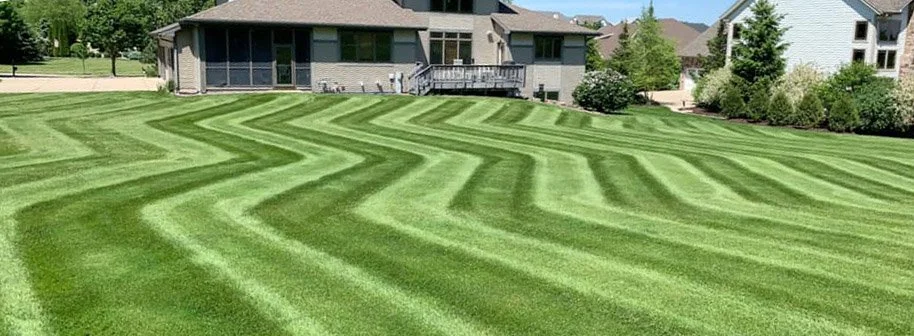
Crabgrass germinates once soil temperature holds near 55 degrees, dandelion pushes hardest in cool autumn, and creeping charlie spreads underground while the surface still looks fine.
Those three schedules are what a weed control company in Verona, WI has to plan around, and they do not line up with each other. One application lands on one of them and misses the rest, which is why our treatments are spaced across the growing season instead of booked as a single visit.
Alt’s Operation has more than 12 years in business, based in Verona and working throughout Dane County. That stretch of treating local turf produces a settled view of what the season does, and weed control here sits inside a six step fertilizer and weed control program, not a standalone spray.
Related: Lawn Care Services in Verona, WI: How One Season Actually Runs
Why Does One Weed Control Application Not Hold a Lawn for a Season?
One application cannot hold a lawn because weeds run on different life cycles. Annual grassy weeds germinate in spring from seed, broadleaf perennials push growth in spring and again in autumn, and spreading perennials move sideways by runner through the summer.
A single product that catches all three at the right moment does not exist, so the schedule does that work instead.
Timing a treatment to the weeds active that month is what separates a program from a spray. A pre-emergent placed in May arrives after crabgrass has already germinated, and a broadleaf treatment in March lands before dandelion and creeping charlie are growing enough to take it in.
Each visit in a program is placed where the weed it targets is most vulnerable.
What Does a Six Step Fertilizer and Weed Control Program Put Down?
A six step program pairs a fertilizer suited to the season with the control the lawn needs at that point, six times across the year. In early spring, a granular pre emergent protects against crabgrass and broadleaf weeds before they surface. In Dane County that first application generally falls between late March and late April.
Late spring brings a liquid herbicide aimed at stubborn weeds in active growth, and early summer brings a nutrient rich granular mix that adds nitrogen and improves how well the soil holds moisture. Mid to late summer carries a second, broad spectrum liquid herbicide for dandelions, thistles and creeping charlie that pushed through the heat.
The fall steps shift the program toward the turf itself. Early fall delivers a nitrogen forward granular feeding, and late fall closes the year with a slow release granular winterizer that the grass stores through the cold months. The sequence moves with the season instead of repeating the same mix six times.
Which Weeds Give Dane County Lawns the Most Trouble?
Creeping charlie gives Dane County homeowners the most trouble, because it travels by runners under the surface and refills ground that looked clear a month earlier. Its round, scalloped leaves hug the soil in shaded, damp corners, and pulling it by hand leaves enough runner behind to start over.
Dandelion is easier to see and easier to treat, and thistles show up most in thinner stretches of turf along edges and in full sun. Both respond to liquid herbicide while they are in active growth, which is why the program carries two liquid applications instead of one.
Crabgrass is a summer problem decided in April, since the pre emergent window has closed by the time anyone spots it. Each of those weeds responds to a different month on the calendar, and that is the case for treating the season as a whole.
Related: Choosing the Right Fertilization Program for Your Lawn in Middleton and Madison, WI
How Much Does Mowing Height Change Weed Control Results?
Mowing height changes weed control results more than most homeowners expect. Turf cut short exposes bare soil to light, and weed seed germinates in light. Mowing taller shades the surface, keeps soil cooler and slows germination before any product enters the picture.
Our crews stay on top of weed control while mowing and adjust the cutting height across the season, higher in summer heat and lower for fall cleanup. A lawn held at a taller cut through summer typically carries fewer weeds into autumn than an identical lawn cut low.
Homeowners who handle their own mowing still get the full program, and keeping the cut consistent and never scalping the turf protects what the treatments do.
What Should a Homeowner Expect Between Weed Control Visits?
Broadleaf weeds curl and discolor within a few days of a liquid application and break down over the following two or three weeks. That twisting and yellowing is the product working, so the dead growth should be left to break down instead of being pulled while the treatment is still moving through the plant.
Spreading perennials often need a second pass, because the first treatment reaches top growth while the runners below survive it.
Open ground refills with weeds faster than dense turf does, which is why the fertilizer side of the program matters as much as the herbicide. Density is the long term control.
Set Your Weed Control Season Before the First Application Window
Weed pressure is decided months before anyone sees it, which is why the programs we run start early and hold to a schedule. The first step goes down before crabgrass germinates, so the lawn has to be on the calendar before the soil warms.
Alt’s Operation builds fertilizer and weed control programs for lawns across Verona and Dane County, matched to the ground in front of us instead of to a template.
Get in touch and we will walk the lawn with you and set the season. Schedule your weed control program with Alt’s Operation.
In Summary
How soon can the lawn be used after a weed control application in Verona?
The lawn can be used once a liquid application has dried completely, or once a granular application has been watered in by irrigation or rainfall. The Alt’s Operation technician confirms the timing for each visit, since the product and the conditions that day decide it.
Does a weed control program work on a lawn that is already thin?
A weed control program works on a thin lawn, though more slowly. Thin turf leaves open ground that refills with weed seed between visits, so the fertilizer side of the program carries as much weight as the herbicide. Density often takes more than one season to hold.
When should a program start for the coming season?
A program should be booked in late winter, ahead of the first application. That first step targets annual grassy weeds before they germinate, generally between late March and late April in Dane County, so the scheduling conversation belongs before the first weeds show up in the lawn.
Related: Enjoy A Healthier, Weed-Free Lawn With Expert Lawn Care Services In Madison And Fitchburg, WI